

There's a persistent myth in small business circles that running proper marketing requires either a big budget or a technical co-founder.
Neither is true.
Over the last five years, no-code tools have matured to the point where a non-technical business owner — with a few afternoons of setup — can run email marketing, social media scheduling, lead capture, CRM management, and basic automation without writing a single line of code and without hiring a developer.
This is the stack most small businesses actually need. Here's how to build it for under ₦50,000 a month.
What "No-Code" Actually Means
No-code tools are software platforms designed so that anyone can use them without programming knowledge. The setup usually involves clicking, dragging, and filling in fields rather than writing logic or code.
They're not a workaround or a compromise. For most small businesses, they're exactly the right tool — purpose-built for people who need marketing infrastructure without the complexity of enterprise software.
The Stack
1. Brevo (formerly Sendinblue) — Email Marketing and Automation
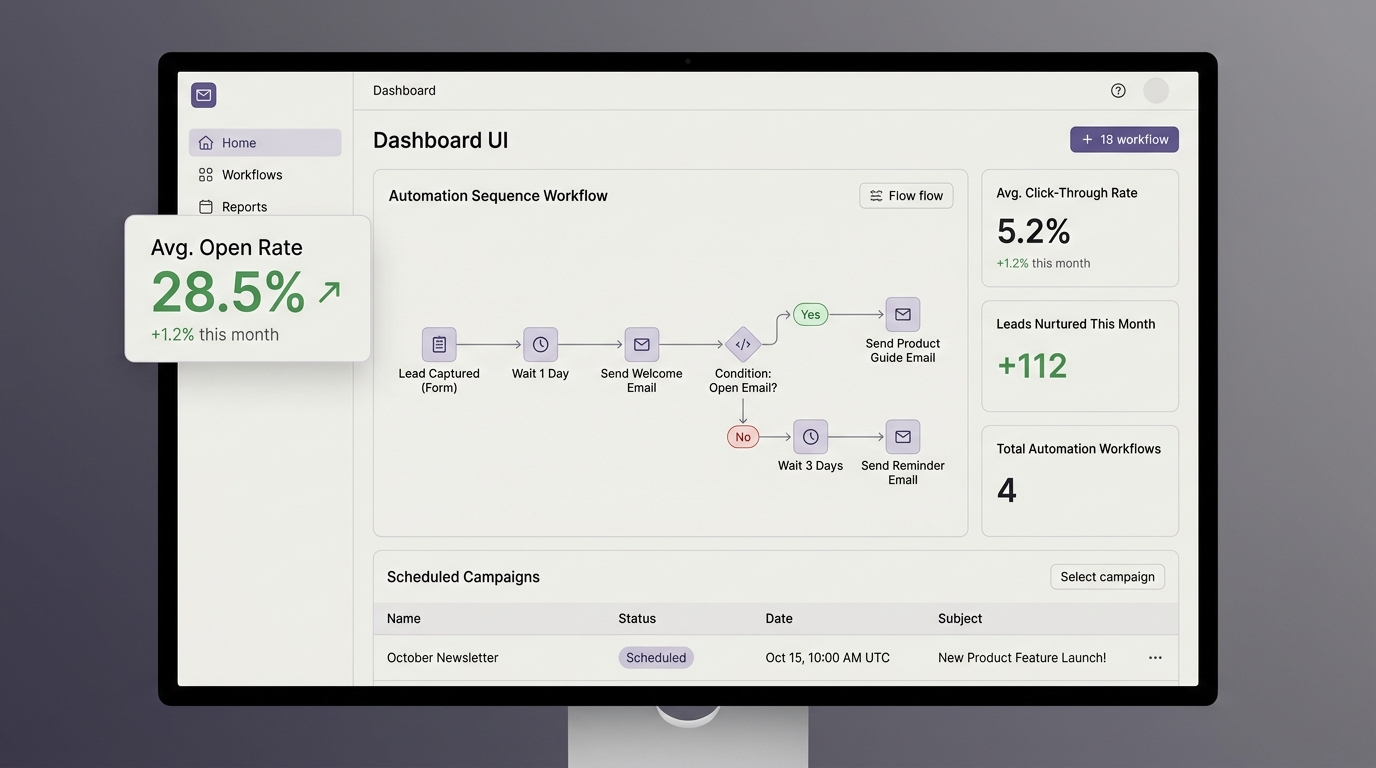
What it does: Brevo lets you build an email list, send newsletters, and create automated email sequences that run without your involvement.
Why it matters: Email marketing still delivers the highest ROI of any digital marketing channel. A welcome sequence that goes out automatically when someone joins your list, a follow-up sequence after a consultation, a quarterly newsletter to stay top-of-mind — all of these can run hands-off once set up.
Approximate cost: Free up to 300 emails/day (plenty for most small businesses starting out). Paid plans from roughly ₦8,000/month.
Best for: Service businesses, local businesses, anyone who wants to nurture leads without manual follow-up.
2. Metricool — Social Media Scheduling and Analytics
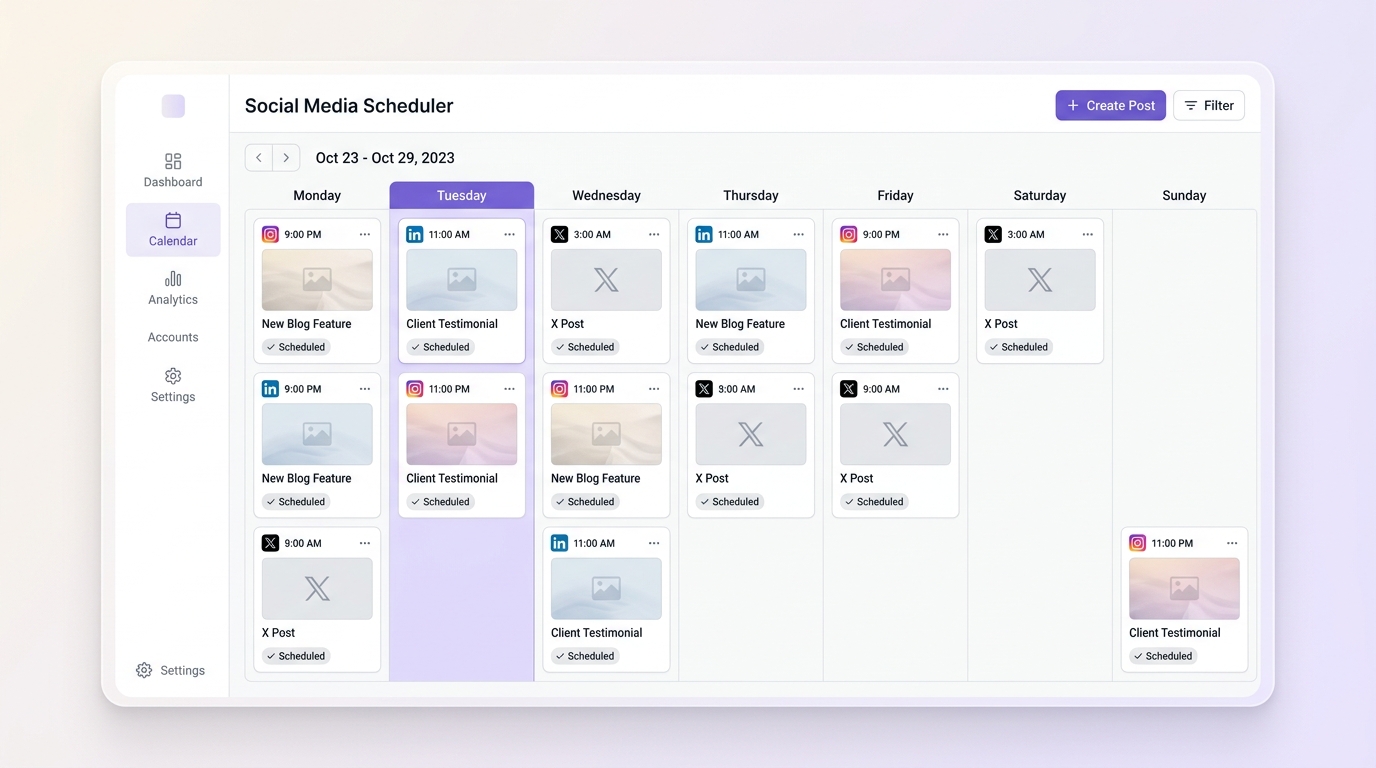
What it does: Metricool connects to your Instagram, Facebook, X (Twitter), LinkedIn, TikTok, and other accounts, lets you schedule posts in advance, and shows you analytics across all platforms in one dashboard.
Why it matters: Consistency is the single most important factor in social media performance. Metricool lets you batch your content creation – sit down once a week and schedule your posts for the week ahead – so your accounts stay active even when you're not.
Approximate cost: Free plan available. Paid plans from roughly ₦6,000/month.
Best for: Any business managing more than one social platform, or anyone who wants to stop posting manually every day.
3. Tally — Lead Capture Forms and Surveys
What it does: Tally lets you build beautiful, functional forms for collecting leads, enquiries, feedback, or any kind of structured information. No design skills required.
Why it matters: Your website needs a way to capture prospect information and route it somewhere useful. Most website contact forms send an email, and that's it — no automation, no organisation, no follow-up. Tally integrates with other tools (via Zapier or native integrations) so submissions automatically trigger workflows: a welcome email, a CRM entry, or a Slack notification.
Approximate cost: The free plan is generous. The Pro plan is roughly ₦4,000/month.
Best for: Replacing basic contact forms, running discovery questionnaires, collecting onboarding information from new clients.

4. Zoho CRM Free — Customer Relationship Management
What it does: A CRM lets you track every prospect and client — where they came from, what stage of the relationship you're at, what follow-up is needed, and what the history of your interaction looks like.
Why it matters: Without a CRM, your leads live in your email inbox, your WhatsApp, and your memory. You forget to follow up. You lose track of where conversations ended. Opportunities go cold not because the prospect wasn't interested but because you didn't get back to them.
A CRM makes your pipeline visible. You can see at a glance who's in conversation, who needs a follow-up, who's gone quiet, and who just converted.
Approximate cost: Zoho CRM has a free plan for up to three users that covers the basics for most small businesses. Paid plans from roughly ₦7,000/month.
Best for: Any business with a sales process longer than a single interaction.

5. Zapier — Automation and Integration
What it does: Zapier connects your tools to each other, automating the handoffs between them. When someone fills in your Tally form, Zapier can automatically create a contact in your Zoho CRM, add them to your Brevo email list, and send you a Slack notification. Without Zapier, you'd do that manually every time.
Why it matters: Each tool in your stack is useful alone. Connected together via Zapier, they become a system — one where information flows automatically and no manual handoff gets dropped.
Approximate cost: Free plan allows 100 tasks/month (enough to start). Paid plans from roughly ₦12,000/month for more volume.
Best for: Businesses ready to stop doing repetitive manual tasks and start letting the tools talk to each other.

What This Stack Costs in Total
| Tool | Monthly Cost (approx.) |
|---|---|
| Brevo (Starter) | ₦8,000 |
| Metricool (Essential) | ₦6,000 |
| Tally (Pro) | ₦4,000 |
| Zoho CRM (Free) | ₦0 |
| Zapier (Starter) | ₦12,000 |
| Total | ≈ ₦30,000/month |
That's a professional marketing stack — email, social, lead capture, CRM, and automation — for around ₦30,000 a month. With careful use of free tiers, you could get to a functional version of this for closer to ₦15,000.
One Important Note
Tools don't replace strategy. This stack gives you infrastructure — but the messaging, the positioning, the content, and the targeting still need to be right for the tools to deliver results.
Think of these tools the way you'd think of a well-equipped kitchen. The equipment makes cooking possible and efficient. The food you cook still depends on knowing what you're making and why.

Conclusion
You don't need a developer, a large agency budget, or a technical background to run professional marketing operations. With the right no-code stack, you need an afternoon of setup and a clear sense of what you're trying to accomplish.
Download the full tool comparison sheet — a side-by-side breakdown of the best no-code tools in each category, with free vs paid feature comparisons and setup guides for each.