

Commissioning a software application is one of the most significant investments a growing business can make. It is also one of the easiest to get wrong — not because developers are unreliable, but because most business owners walk into the process without enough context to ask the right questions, spot the red flags, or understand what they are actually paying for.
This is not a technical guide. It is a practical one — written for the business owner who needs to understand the process well enough to make good decisions without needing to become a developer to do it.
Before Any Code Is Written: The Planning Stage
The most expensive mistakes in software development don't happen during development. They happen before it – in the gap between what a business owner imagines and what gets communicated to the people building it.
Before any developer writes a single line of code, there should be a clear, documented answer to these questions:
What problem does this application solve, and for whom?
What does a user do when they open it — step by step?
What does success look like at three months, six months, one year?
What does the application need to connect to — payment systems, existing databases, third-party tools?

A developer who jumps straight into building without walking you through these questions is a developer worth being cautious about. Good development starts with good discovery.
What to ask: Can you walk me through how you typically approach scoping a project before development begins?
Understanding the Technology Choices (Without Needing to Know the Technology)
At some point in the process, a developer or agency will present you with a technology stack — the combination of tools, languages, and frameworks they intend to use to build your application. You do not need to understand what React, Node.js, or PostgreSQL are in detail. You do need to understand why they are being recommended for your specific project.
The questions that matter are not technical. They are strategic:
Is this technology widely used and well-supported, or is it niche and harder to find talent for if we need to bring in additional developers later?
Will this choice make the application easier or harder to maintain and update after launch?
Are there licensing costs or ongoing fees associated with any of the tools being proposed?
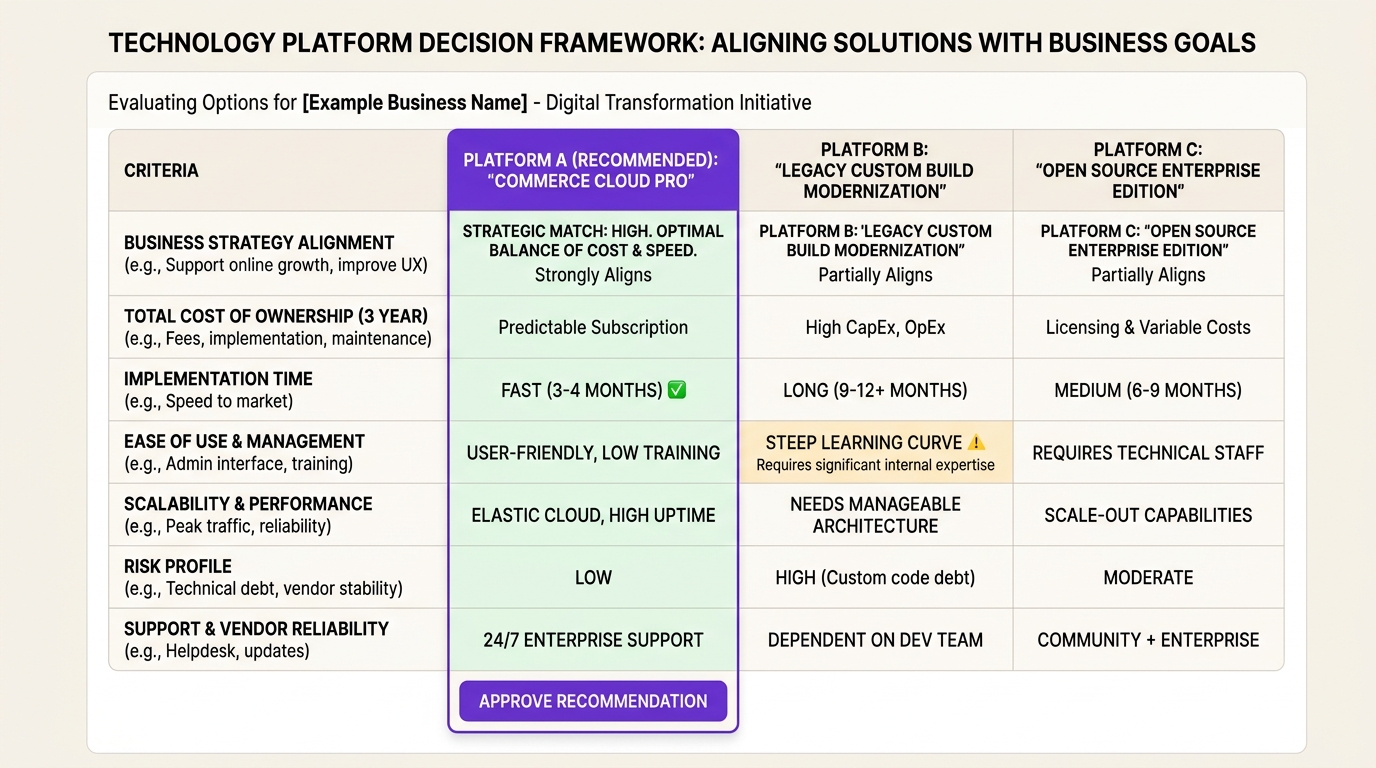
A competent developer should be able to answer these questions in plain language. If the response to "why this stack?" is a list of technical terms with no business rationale, push back.
What to ask: If we needed to bring in a different developer to maintain this after launch, how easy would that be with the technology you're proposing?
The Backend: What It Is and Why It Matters to You
Most business owners are comfortable with the idea of a front end — the part of the application users see and interact with. The backend is less visible but arguably more important to get right.
The backend is where your data lives, where your business logic runs, and where the security of your application is either built in or left out. It is the foundation everything else sits on.
From a business perspective, what matters about the backend is the following:
Data ownership. Where is your data stored, and do you have full access to it? This is a question worth asking explicitly, especially if you are working with a smaller agency or freelancer.
Security. How is user data protected? How is authentication handled? These are not optional considerations — they are legal obligations in many jurisdictions and reputational risks in all of them.
Scalability. If your user base grows from 500 to 50,000, does the backend architecture support that without a complete rebuild?
What to ask: Where will our data be stored, who owns it, and what happens to it if we part ways?
The Frontend: What Your Users Experience
The frontend is the part of the application your users interact with directly. It is where design, functionality, and user experience meet — and where the gap between a good product and a frustrating one is most immediately felt.
For business owners, the frontend conversation is often the most comfortable part of the process because it is the most visible. But comfort can become a trap. It is easy to spend disproportionate time discussing how things look while underinvesting in how they work.
A few things worth paying attention to:
Mobile experience. In Nigeria, the majority of users will access your application on a mobile device. If your developer is not building mobile-first, that is a problem worth addressing before development is underway, not after.
Performance. A visually impressive frontend that loads slowly is a business problem, not just a technical one. Page load times directly affect whether users stay or leave.
Accessibility. Applications that work only under ideal conditions – fast connection, specific device, and specific browser – are applications with a smaller addressable market than they need to have.
What to ask: How are you approaching the mobile experience, and how will we test it before launch?
Testing: The Stage Most Clients Don't Think to Ask About
Testing is where applications either earn their reliability or reveal their gaps. It is also the stage most commonly compressed when budgets are tight or deadlines are close — which means it is the stage you most need to ask about explicitly.
A properly tested application goes through multiple layers of checks before it reaches your users:
Individual components tested in isolation
Integrations between different parts of the system tested together
End-to-end testing that simulates how a real user moves through the application

From a business perspective, the cost of inadequate testing is not just bugs at launch. It is the reputational damage of a product that fails in front of clients, the developer time required to diagnose and fix production issues under pressure, and in some cases, the data loss or security exposure that comes from untested edge cases.
What to ask: What does your testing process look like, and can you show me examples of how issues are documented and resolved before launch?
Deployment and What Happens After Launch
Launch is not the finish line. For most applications, it is closer to the starting pistol.
Deployment — the process of making your application live and accessible — involves decisions that have long-term implications for cost, performance, and maintainability. Cloud providers like AWS, Google Cloud, and Azure each have different pricing models and capability profiles. The choice of how your application is deployed affects how much you pay to run it and how easily it can be scaled or updated.
More importantly for business owners, what is the plan after launch?
Who maintains the application and handles bug fixes?
How are updates and new features scoped and priced?
What monitoring is in place to alert someone when something breaks?
What is the handover process if you decide to change development partners?

These are not hypothetical questions. They are the questions that determine whether your investment continues to deliver value or becomes a liability you cannot easily exit.
What to ask: What does the maintenance arrangement look like after launch, and what is included versus charged additionally?
The One Thing That Protects You Throughout
Across every stage of a software project, the single most protective thing a business owner can do is insist on documentation. Documented requirements. Documented architecture decisions. Documented API structures. Documented handover materials.
Documentation is what gives you ownership of what has been built — not just in a contractual sense, but in a practical one. It is what allows a new developer to pick up where the last one left off. It is what protects you if a relationship with a development partner breaks down.
If a developer or agency is reluctant to produce or maintain documentation, that reluctance is itself important information.

You Don't Need to Understand Everything. You Need to Ask the Right Questions.
The goal of this guide is not to turn you into a technical project manager. It is to give you enough grounding to be a better client — one who asks the questions that protect your investment, spots the answers that should concern you, and understands the process well enough to make informed decisions at each stage.
Good developers and agencies welcome informed clients. The questions above are not obstacles to the relationship — they are the foundation of one that delivers what you actually need.
Building something and want a team that will walk you through every stage in plain language? That is exactly how we work. Get in touch and let's talk about what you're building.