
Becoming a developer is one of the more rewarding career paths you can take — it combines creative thinking, logical problem-solving, and the satisfaction of building things that actually work. But the journey looks different for everyone, and knowing where to start makes a significant difference.
Whether you want to build websites, mobile apps, or complex software systems, here is a clear, honest breakdown of how the path typically unfolds.
Start With a Language — One Language
The first mistake most aspiring developers make is trying to learn everything at once. Don't.
Pick one programming language and go deep before going wide. Three solid starting points:
Python — clean syntax, beginner-friendly, and widely used in data science, automation, and backend development
JavaScript — essential for web development and one of the most in-demand languages in the industry
Java — verbose but rigorous, and still heavily used in enterprise and Android development

Start small. Work through tutorials. Build simple projects. The goal at this stage is not to become an expert — it's to develop an intuition for how code thinks.
Choose a Direction
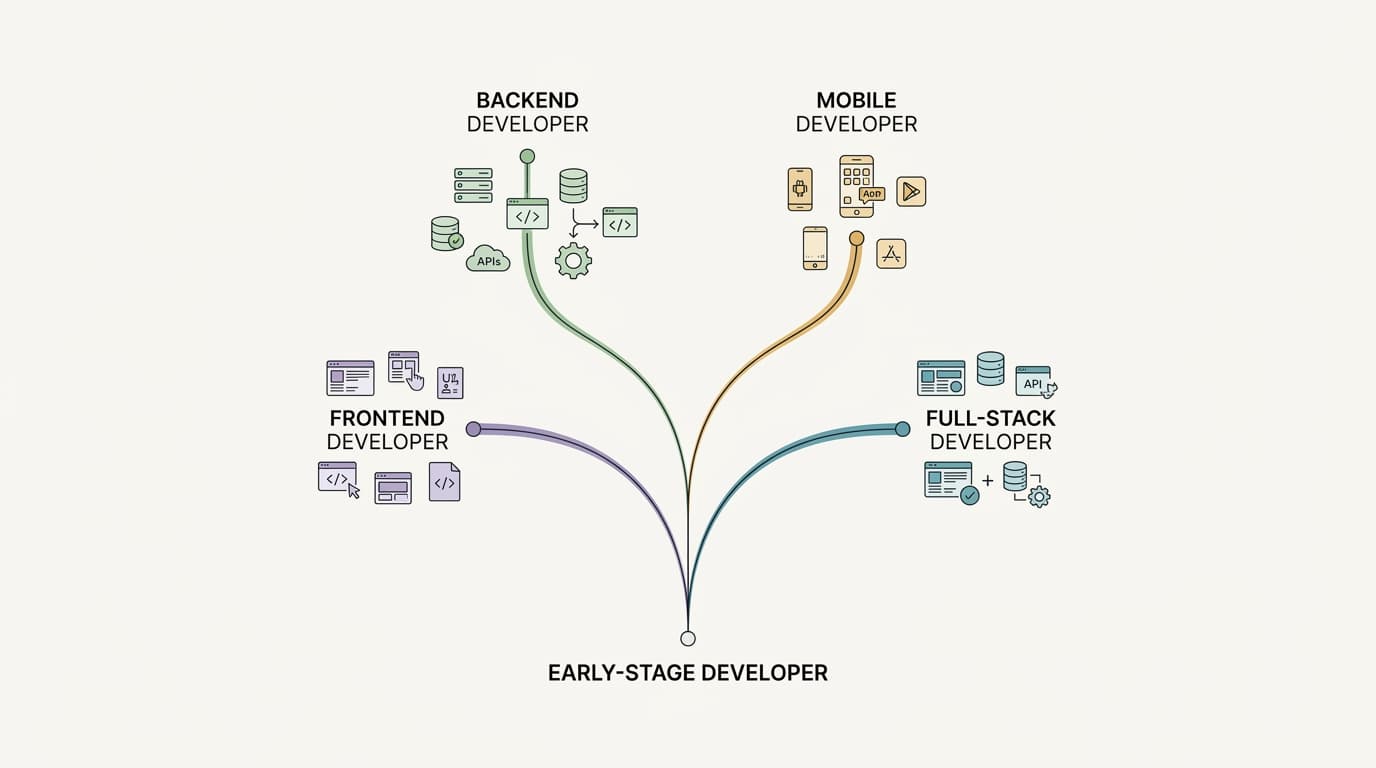
Once the fundamentals feel comfortable, it's time to choose a specialization. The field of development is broad, and trying to master all of it simultaneously is a reliable way to master none of it.
Some of the most common paths:
Frontend development — building what users see and interact with, using HTML, CSS, and JavaScript frameworks like React or Vue
Backend development — handling the server side: databases, APIs, and the logic that powers applications, using tools like Node.js, Django, or Laravel
Full-stack development — covering both frontend and backend, giving you a broader but more demanding skill set
Mobile development — building for iOS or Android, using Swift, Kotlin, or cross-platform frameworks like Flutter
Game development, DevOps, data engineering — more specialised paths that follow once the fundamentals are solid

None of these choices are permanent. Many developers shift specializations as they grow. But having a direction gives your learning structure and your portfolio coherence.
Build Things. Real Things.
Reading about code is not the same as writing it. At some point — sooner than feels comfortable — you need to start building.
This does not mean your projects have to be impressive. It means they have to be real. A personal portfolio site. A simple to-do app. A weather dashboard that pulls from a public API. The complexity is less important than the habit of completing things.
As you progress, raise the bar. Contribute to open-source projects on GitHub. Take on small freelance jobs. Build something that addresses a problem you genuinely have.

Two things that are non-negotiable at this stage: Git and GitHub. Version control is not optional in professional development—it is the baseline expectation everywhere you will work. Learn it early, and learn it properly.
Get Into the Community
Software development is not a solitary discipline, even when it feels like one. The developers who grow fastest almost always plug into a community.
Find your people—online or in person. Nigerian developer communities like She Code Africa, Forloop, and various city-based tech meetups are active and genuinely useful. Platforms like Stack Overflow, Dev.to, and X (Twitter) have strong developer presences worth engaging with.
Beyond the social dimension, communities expose you to how experienced developers think — how they approach problems, what tools they actually use, and what the industry looks like from the inside. Tutorials alone make it difficult to get that context.

Keep Learning — Deliberately
Tech moves fast. What was best practice three years ago may be outdated today. Staying current is not optional; it is part of the job description.
This does not mean chasing every new framework or rewriting your stack every six months. It means being intentional about growth. Some ways to do that:
Follow respected developers and engineering blogs in your specialisation
Take on projects that push slightly beyond your current skill level
Pursue certifications where they are recognised and relevant—AWS, Google Cloud, and Microsoft Azure certifications carry weight in many roles
Participate in coding challenges on platforms like LeetCode or HackerRank, especially if you are targeting larger companies
On Formal Education
This question comes up constantly: Do I need a degree?
The honest answer is that it depends on what you want.
Many working developers are entirely self-taught or bootcamp-trained. A strong portfolio, demonstrable skills, and a good professional network can take you far, especially in startups and agencies.
That said, a computer science degree still carries weight at larger organizations and in certain markets. It also builds foundational knowledge—algorithms, data structures, and systems thinking—that self-directed learning sometimes skips.
Whichever route you take, the fundamentals are the same: build things, stay curious, know your tools, and document your work well enough that someone else can evaluate it.
The Honest Summary
Becoming a developer takes longer than most people expect and is more achievable than most people fear. The barrier is not talent — it is consistency.
Pick a language. Build something. Find a community. Stay current. And give it more than a few months before you decide whether it is working.
The industry needs people who can build things well. That is a skill you can develop. The path is there — you just have to start walking it.
Interested in what it looks like to work with developers who have already made this journey? Explore what our team builds, and get in touch if you have a project worth building.