
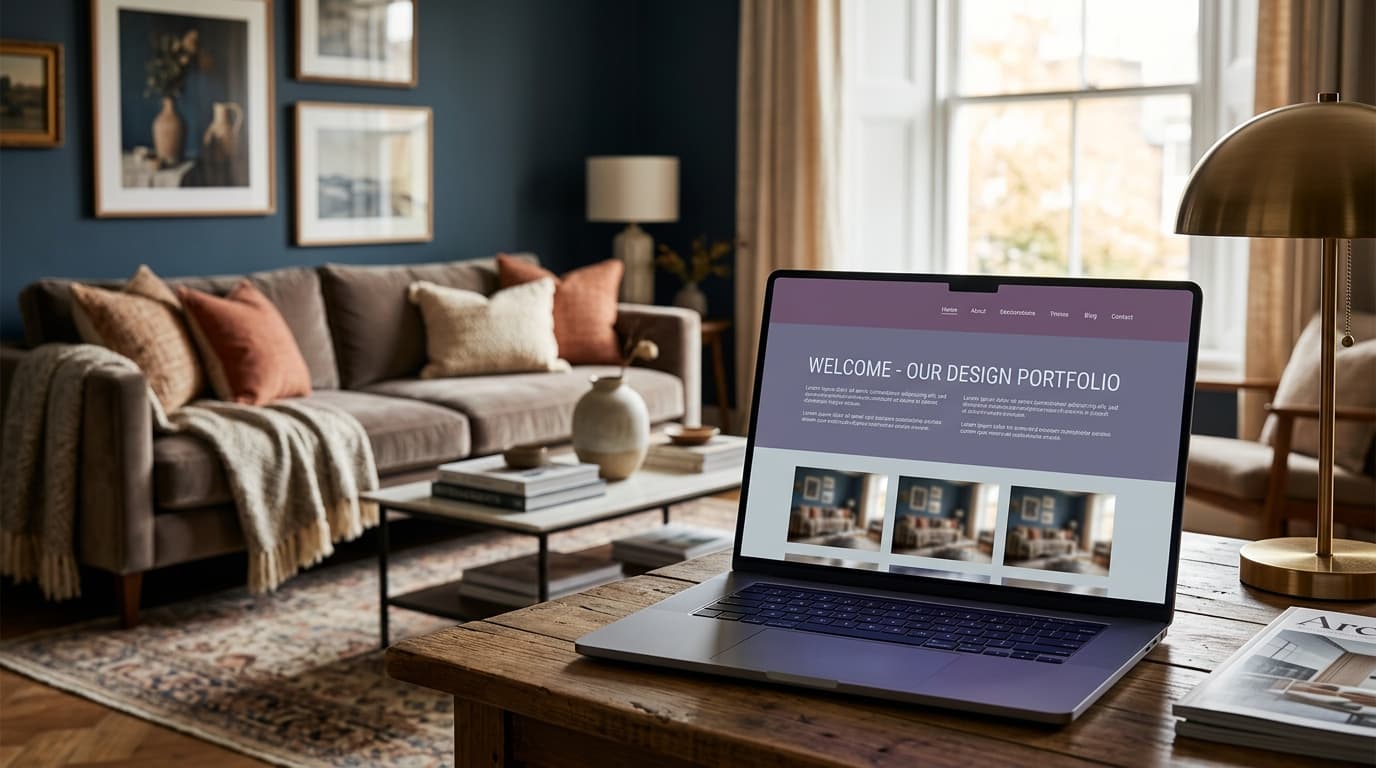
The interior design industry is one of the most visually driven businesses in existence. Your work speaks for itself — in person. The problem is that most of your potential clients will never see your work in person until they've already decided to trust you. And that decision happens online, long before the first call.
For interior designers and home décor businesses, a weak digital presence isn't just a missed opportunity. It's a direct contradiction of everything your work stands for.
Your Portfolio Is Only as Good as Where It Lives
Interior design is a visual discipline. Clients are hiring you, at least in part, because they trust your eye. Which means the first place they encounter your aesthetic — your website, your Instagram, or your Google Business profile — is already a sample of your work whether you intend it to be or not.
A cluttered, outdated, or poorly designed website doesn't just fail to impress. It actively undermines confidence in your design sensibility. If the space you've built for your own business feels neglected, why would a client trust you with theirs?
The standard has to be consistent. The same intentionality you bring to a client's living room needs to show up in every digital touchpoint your business owns.

The Principles That Work in Rooms Also Work Online
The fundamentals of good interior design translate directly to good digital design — and understanding that connection can help you think about your online presence more clearly.
Function before form. The first question in any interior project is, 'What is this space for?' The same question applies to your website. Is it there to showcase your portfolio? Generate consultation bookings? Build trust with high-end residential clients? Every design decision — layout, navigation, calls to action — should serve that function. A beautiful website that doesn't convert visitors into enquiries is the digital equivalent of a stunning room nobody can comfortably sit in.
Colour sets the mood before anything else. Interior designers know this instinctively. Online, your brand colour palette is doing the same work — communicating tone, positioning, and personality before a visitor reads a single word. Neutral, editorial palettes signal a certain kind of client. Bold, saturated palettes signal another. The question is whether your current palette is attracting the clients you actually want.
Texture and layering create depth. In a room, this means mixing materials – wood, stone, fabric, and light. On a website or social media profile, it means mixing content types: portfolio images, behind-the-scenes process content, client testimonials, and short-form video walkthroughs. A flat, single-format feed feels the same way a room with one material does — technically fine, but somehow lifeless.
Personal touches build connection. The details that make a designed space feel inhabited — the curated objects, the artwork, the evidence of a specific point of view — are what separate a memorable space from a generic one. Online, this is your voice. Your captions. The way you explain your process. The opinions you have about design. Clients don't just hire a skill set. They hire a perspective. Your digital presence should make yours visible.

Where Most Interior Design Businesses Fall Short Online
The patterns are consistent across the industry:
Instagram is treated as the only channel. Social media is important, but it is not a website. It does not rank in Google search. It does not give you ownership of your audience. It can disappear, change its algorithm, or limit your reach at any point. An Instagram profile is a marketing channel. A website is an asset. Both matter, and they serve different functions.
Portfolio images are not optimised for search. A stunning project photograph does nothing for your discoverability if the file is named "IMG_4872.jpg" and has no descriptive alt text. Interior designers are sitting on enormous amounts of content that search engines cannot read. Small technical fixes here have a disproportionate impact on organic visibility.
There is no clear next step. Many interior design websites showcase beautiful work and then leave the visitor with no obvious action to take. No consultation booking link. No clear pricing tier or service description. No contact form that inspires confidence. The aesthetic does the heavy lifting, and the conversion architecture does nothing. That is a fixable problem.
The Google Business Profile is neglected. For designers who work with local residential clients, Google search is where those clients start. A properly set up, regularly updated Google Business Profile — with photos, services, and reviews — is one of the highest-leverage, lowest-cost things a local service business can do. Most don't do it.

What a Strong Digital Presence Does for an Interior Design Business
When the digital presence matches the quality of the work:
Clients arrive already pre-sold on your aesthetic, which shortens the sales conversation significantly
Enquiries are more qualified — people who reach out already understand your style and price point
Premium pricing becomes easier to justify because the perceived professionalism is already established before the first meeting
Referrals are amplified — when a satisfied client recommends you, the person they're recommending you to can immediately find a digital presence that confirms the recommendation
The goal is not to be everywhere online. It is to ensure that wherever a potential client finds you, what they find reflects the standard of work you actually deliver.
Where to Start
If your digital presence doesn't currently reflect the quality of your work, the most useful thing is to prioritise rather than overhaul everything at once:
Your website's portfolio section — high-quality images, project descriptions that explain your process and the client's brief, clear calls to action
Your Google Business Profile — updated, complete, with recent photos and a mechanism for collecting reviews
Your Instagram content strategy — a mix of finished work, process content, and perspective pieces that communicate your point of view, not just your output
A simple, functional enquiry process — a contact form that sets expectations, confirms receipt, and routes to somewhere that gets checked
None of this requires a complete rebuild. It requires the same thing good interior design requires: a clear brief, deliberate choices, and consistent follow-through.
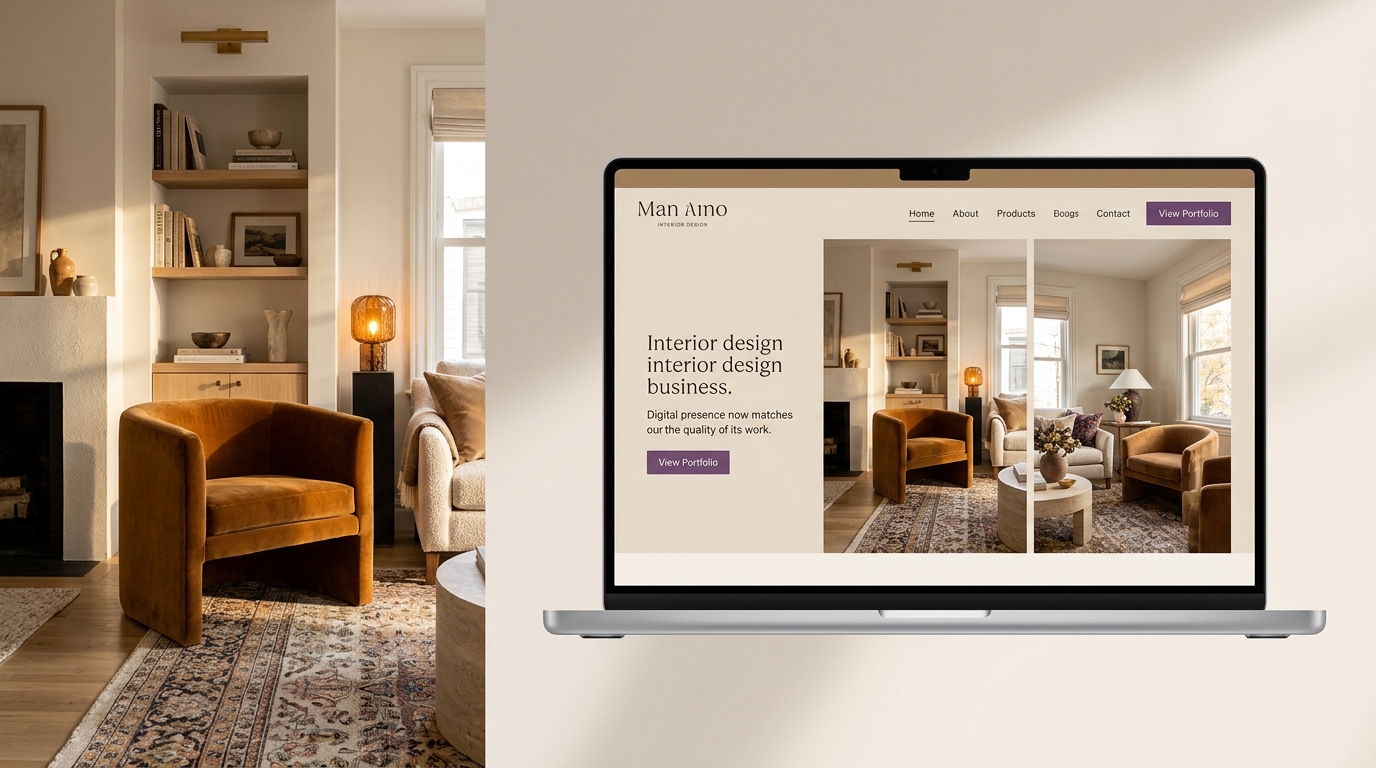
Your work deserves to be found by the clients it was made for. If your digital presence isn't doing that job yet, that's exactly the kind of problem we solve. Book a free audit and let's look at it together.